
Research
CURE CASK
CASK Research partnered with Cure CASK and Association Enfants CASK France to fund a research project that aims to cure CASK gene disorders by activating a backup copy of CASK in girls.

Latest news
The CASK Research co-funded part of this study ended in March 2026.
Cure CASK USA are now fundraising for phase 2 of the project. Donate →
The theory
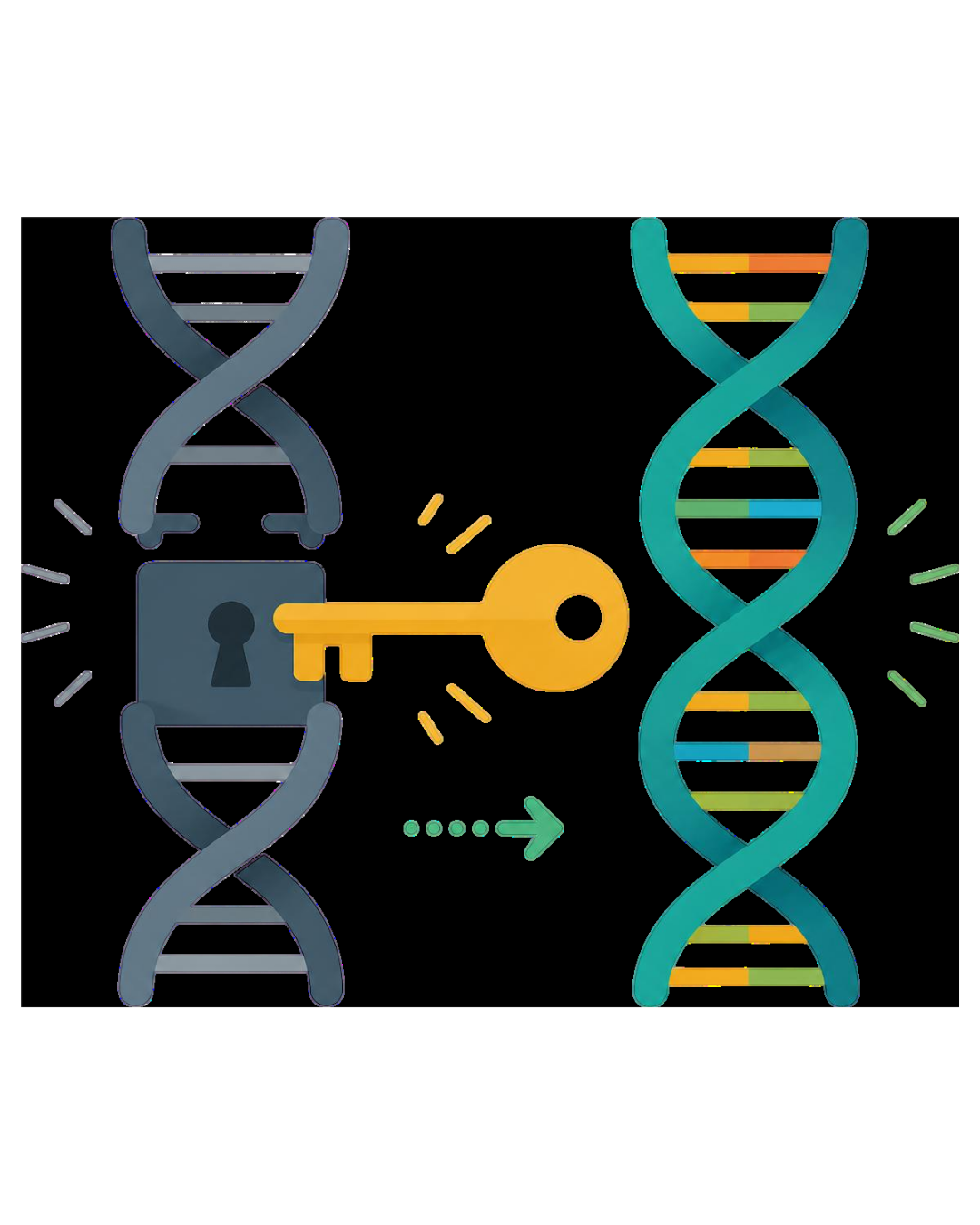
In the brain of every female with a CASK gene mutation there are silenced copies of the healthy CASK gene. The project is "turning on" these silenced genes, so the genes can create CASK protein.
This will, theoretically, result in a brain which — initially having just half of the CASK protein needed to function properly — will have much more. This could have a dramatic impact on prognosis, because the brain will have enough CASK protein to function properly. It could, effectively, cure CASK.
It is still unknown how much the condition can be improved by gene therapy. It is hopeful that, by ensuring CASK protein is working effectively in every cell, a significant improvement should be seen — and, if applied early enough, possibly cure the condition.
The research
The project involves creating human induced pluripotent stem cells, growing them in a dish and turning them into different types of brain cells in order to evaluate the efficacy and efficiency of the approach.
If this approach is successful then the team will have enough data to apply for larger grants from funders like the NIH. The next step is characterizing mouse models of CASK — assessing the ability of the therapeutic to reactivate the healthy copy of CASK in the brain of mice and testing the level of recovery this approach could achieve.
Why we initiated this work
Activating CASK in enough cells could conceivably reverse CASK gene disorder symptoms. As a result, CASK Research Foundation — advised by its expert scientific review committee — agreed to raise funds for this game-changing project.

The history
CASK aims to follow in the footsteps of another X-linked genetic disorder: CDKL5 deficiency disorder. X-reactivation has successfully been done in mice models for the CDKL5 gene. The team at UC Davis were eager to have the opportunity to try their technique on the CASK gene — a gene that displays all the markers of being a successful candidate for this novel therapeutic.
Now they have successfully activated the CASK gene in human cells the next step is to check their technique works in animal models and that functional improvements are seen.
UC Davis
The UC Davis MIND Institute, located in California, is a collaborative international research center committed to the awareness, understanding, prevention, and treatment of the challenges associated with neurodevelopmental disabilities and rare X-linked disorders.